Common mistakes when implementing ISO standards

One of the most common but underestimated mistakes is the implementation of ISO as a separate system that is parallel to real production.

On paper, everything looks perfect: there are regulations, cleaning schedules, instructions, and control points. However, within a shift, production operates according to different rules, influenced by the pressure of the plan, limited cleaning time, equipment specifications, and human factors.

This is particularly evident in sanitary cleaning. For example, the regulations may require a certain amount of time for the cleaning solution to be effective, but the line is started earlier due to a tight schedule. Or the cleaning scheme is formally approved, but employees adapt it because certain areas of equipment are difficult to clean well within the existing process.

Over time, unofficial practices emerge in production:

  • individual processing steps are reduced;
  • the washing sequence is changed;
  • some procedures are performed «by eye»;
  • sanitary operations begin to depend on a specific shift or operator.

The problem is that deviations in the system are rarely noticeable at first. On the surface, everything looks normal: the documents are filled out, the inspections are conducted, and the equipment is cleaned daily. However, the sanitary treatment gradually becomes less effective and manageable.

Sanitary zones are designed without taking into account future washing

When designing or upgrading a food production facility, the focus is often on productivity, logistics, and equipment placement. However, sanitary considerations are often overlooked until it becomes more difficult and expensive to make changes. As a result, there are areas that meet the requirements but are not suitable for regular and effective cleaning:

  • hard-to-reach connections;
  • closed sections of pipelines;
  • areas with constant moisture accumulation;
  • complex joints and fasteners;
  • equipment that cannot be fully processed without partial disassembly.

In practice, such areas become a source of constant sanitary problems. Even with strict adherence to regulations and the use of high-quality chemicals, the operator cannot guarantee uniform treatment of all surfaces.

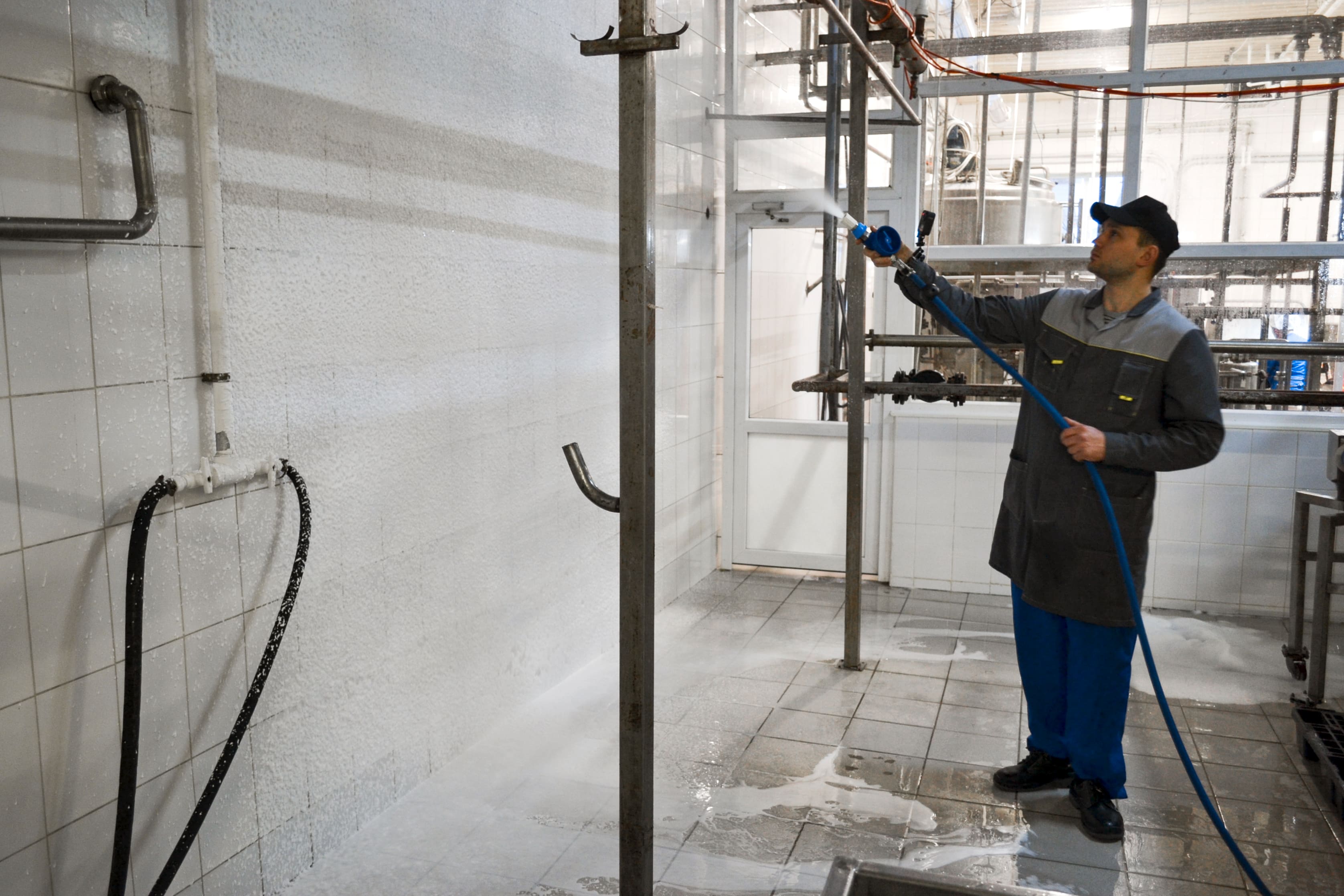
This is especially difficult with foam washing. If the area is not adapted for this method, the foam is distributed unevenly. Some areas remain dirty even after several cycles.

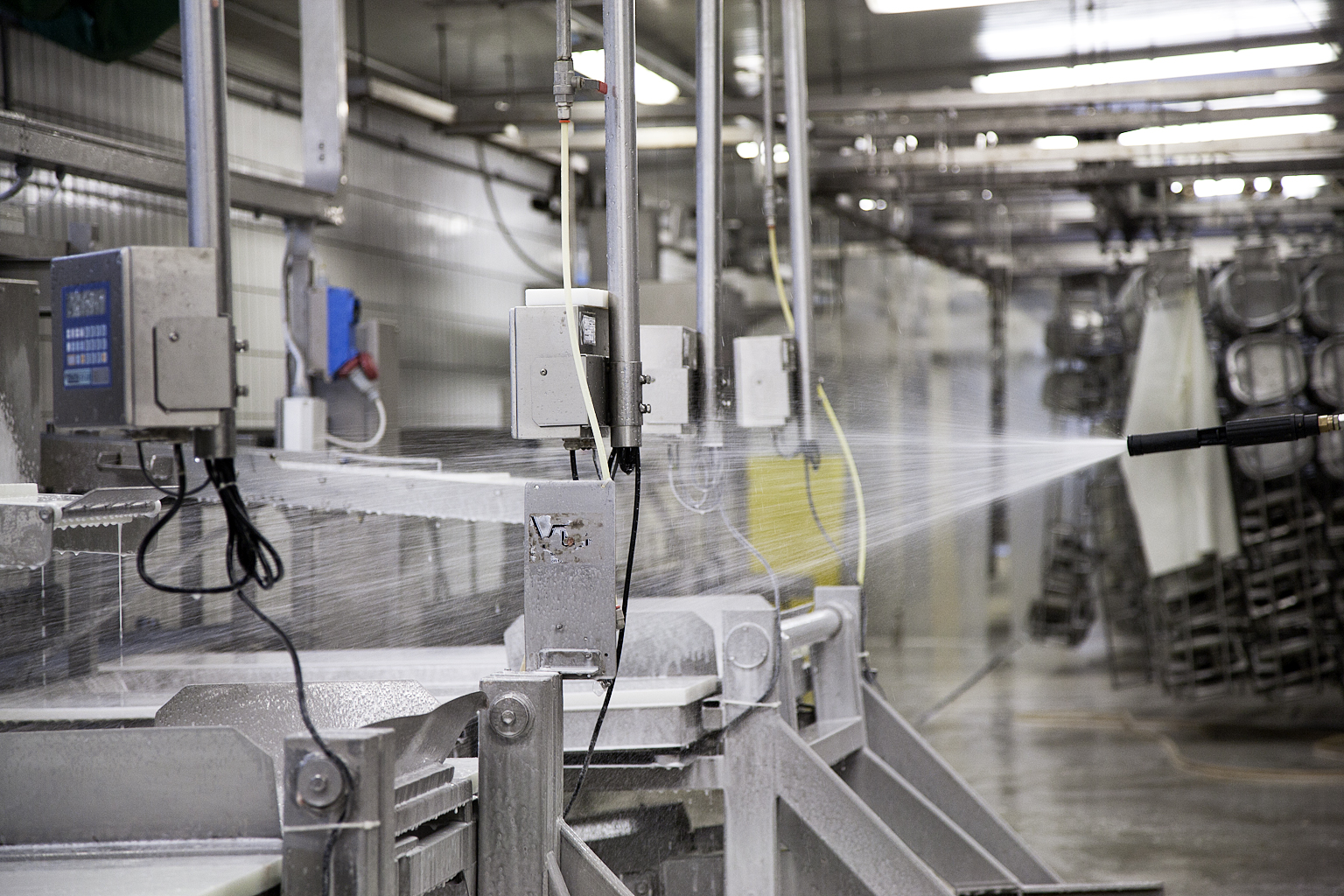
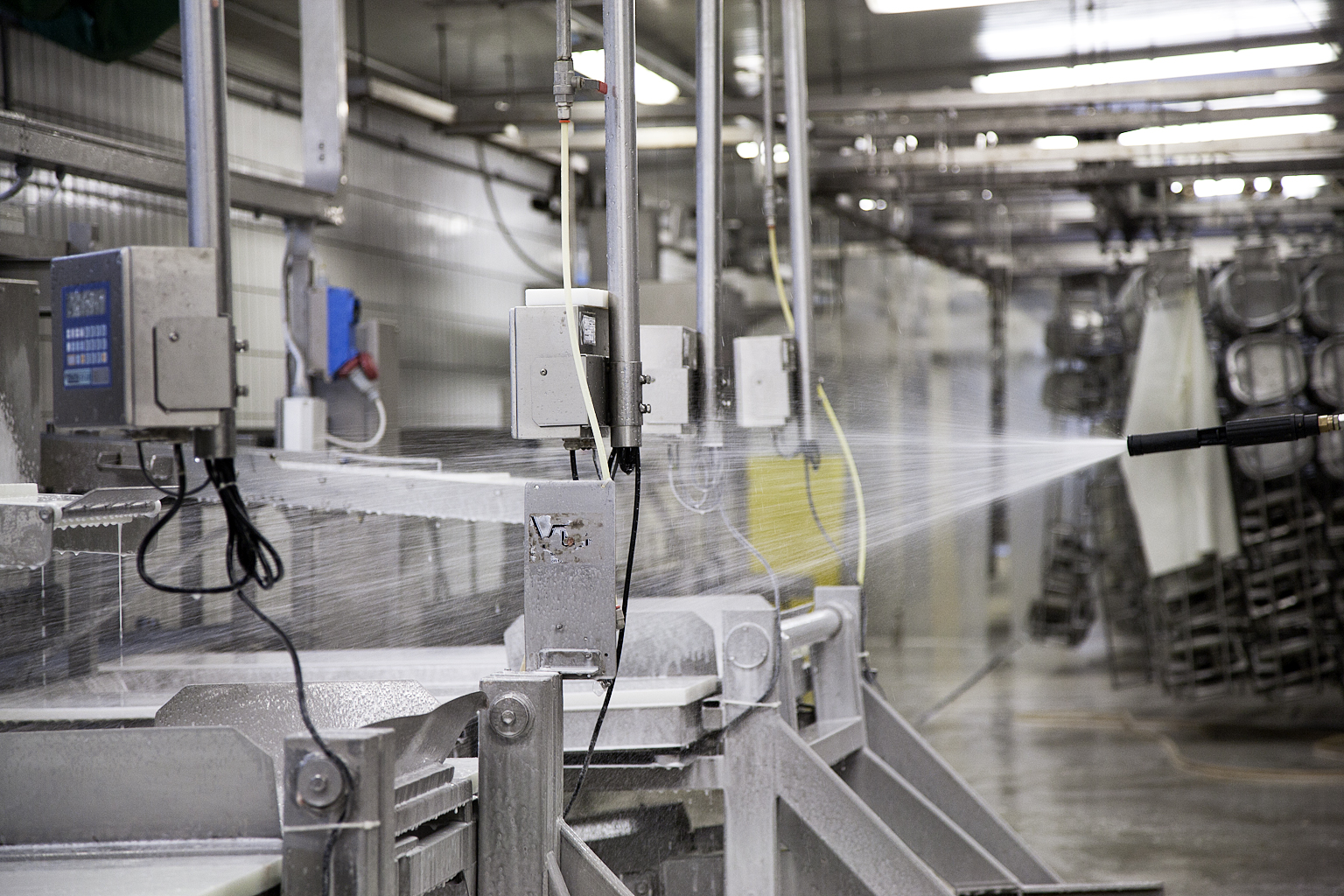
Over time, manufacturers have tried to compensate for these shortcomings by increasing the processing time, water consumption, and concentration of detergents. However, this does not solve the problem, as the system still relies on constant manual adjustments.

Therefore, effective sanitization does not start with the choice of chemicals or equipment, but with the proper design of the space. This is the only way to ensure a stable, fast, and equally effective cleaning process in each shift.

Foam washing is evaluated visually, not by its effectiveness

One of the most common mistakes when implementing ISO standards in food production is replacing actual sanitization with visual inspection.

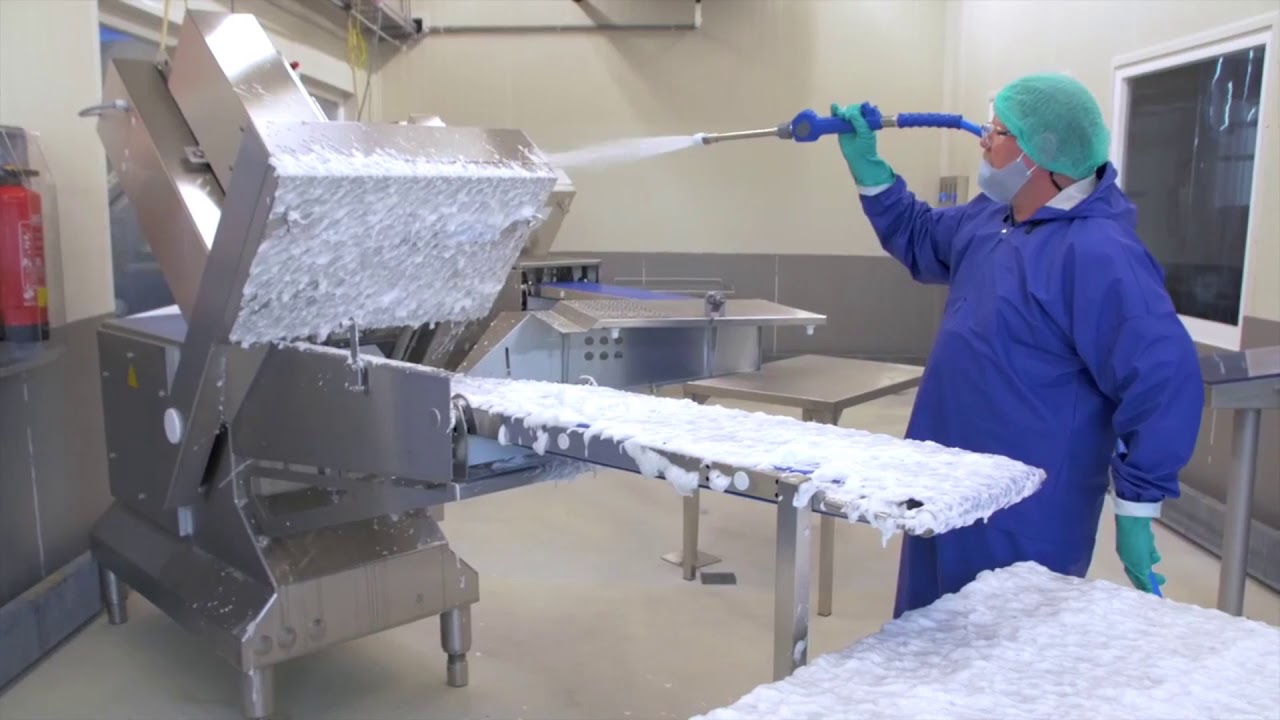
In practice, this means that if the surface is covered with foam and appears clean, the process is considered complete. This approach quickly becomes habitual because it is convenient: it is easy to check, there is no need for measurements, and it does not complicate the work of employees.

However, visual «cleanliness» is not an indicator of the effectiveness of the washing process. The foam may cover the surface evenly, but:

  • not to provide a sufficient concentration of the active substance;
  • not to withstand the required contact time with the contamination;
  • not to penetrate the microrelief of the surface;
  • not to destroy stable organic and fatty deposits.

Formally, the sanitary treatment is considered to be completed, but microbiological safety may be at risk due to residual contaminants.

This problem often arises when implementing ISO standards, where the focus shifts to documenting the completion of procedures rather than their effectiveness. In logs and checklists, it is noted that the washing has been completed, the parameters have been recorded, and there are no deviations. However, the actual quality of the cleaning is overlooked.

Visual inspection creates a false sense of stability. The production team believes that the system is functioning correctly, as the external results appear consistent from shift to shift. But at the same time, key parameters are ignored: solution concentration, flow stability, pressure, temperature, and exposure time.

There is a gap between formal compliance with ISO standards and real sanitary efficiency: there is a process, there is control, but there is no measurable treatment quality.

Production underestimates the cost of "reprocessing"

When implementing ISO standards and developing sanitary procedures, the logic is often as follows: the more processing, the safer it is. However, in practice, this leads to the opposite result: production begins to compensate for the uncertainty of processes by increasing the washing time, the concentration of chemicals, and the number of processing cycles.

At first glance, this appears to be an increase in control. However, there is an underlying issue: «overprocessing,» which is rarely considered as a separate risk.

This typically manifests itself in the following ways:

  • the time of sanitary stops on the line increases;
  • the consumption of detergents and disinfectants increases;
  • the equipment is exposed to more aggressive conditions than required by the regulations;
  • certain areas are washed again just in case.

The reason for this approach is clear. If there is no confidence in the stability of the result, the system begins to work with a margin. However, this margin gradually becomes the norm and ceases to be perceived as a deviation.

At the same time, overprocessing has direct consequences that are often overlooked in economic accounting:

  • accelerated wear of seals, hoses, and connections;
  • increased maintenance costs for equipment;
  • disruption of the production process;
  • decreased overall shift efficiency.

This is especially true in systems where sanitation depends on manual labor or inconsistent solution delivery parameters. In such cases, increasing the «washing intensity» does not improve the quality, but rather masks the lack of process control.

The implementation of ISO creates an illusion of compliance by documenting processes, strengthening control, and increasing resources. However, the actual efficiency of the system may decrease due to the excessive use of parameters instead of precise control.

Therefore, mature sanitary systems are more focused on the reproducibility of results achieved through stable parameters rather than excessive effort.

ISO does not take into account the actual turnover of staff 

One of the hidden problems when implementing ISO in food production is the design of a system that is focused on a «stable and trained employee.» However, in reality, it is almost impossible to find such an ideal employee on the production line.

In the documentation, the processes are described in a logical and consistent manner, with the use of instructions, regulations, sanitary treatment schemes, and checklists. It is assumed that the operator is well-versed in the sequence of actions, understands the critical parameters, and strictly follows the established procedures.

However, the actual situation on the production line is different:

  • high staff turnover;
  • constant introduction of new employees;
  • seasonal workers and substitute shifts;
  • different levels of operator training within the same line.

In such conditions, even a well-written procedure ceases to be a universal standard. It begins to be understood in different ways, depending on the employee’s experience, work schedule, and production workload.

This is particularly evident in sanitary processes. When a cleaning system requires strict adherence to a sequence of actions, concentration control, or exposure time, each new employee must essentially learn the process anew. They may simplify, speed up, or skip certain steps.

As a result, a stratification effect occurs:

  • on paper, the process remains the same;
  • in reality, the quality of execution depends greatly on the individual.

ISO faces a serious problem: the standard defines how it should be, but it does not always take into account changes in the composition of the performers.

Without technological support – equipment that reduces dependence on the human factor and increases automation and repeatability of processes – the system loses stability not only at the level of documentation, but also in execution.

In production, the fact of washing is controlled, but not the reproducibility of the result

One of the main mistakes when implementing ISO in food production facilities is shifting control from the quality of the result to the formal implementation of sanitary procedures.

In most systems, this seems correct: the washing has been carried out, the checklist has been completed, the parameters have been marked, and there are no deviations. From a documentation perspective, everything looks fine.

However, the main question remains unanswered: was the same result achieved after each sanitary treatment?

In practice, this aspect is often overlooked. The production records that the process has been completed, but it does not check its reproducibility — the ability to achieve the same level of cleaning under the same conditions every time.

As a result, a situation arises when:

  • the same area after washing may have different levels of residual contamination;
  • the effectiveness of the treatment depends on the shift or operator;
  • the process parameters are formally observed, but the actual result «floats».

In the standard interpretation, ISO systems are more focused on confirming the execution of procedures than on measuring the stability of results. This is particularly evident in sanitary processing, where visual inspection and checklists are insufficient to assess the actual quality of cleaning.


Another issue is that the lack of reproducibility control often goes unnoticed for a long time. At the audit level, the system appears stable because it focuses on verifying the existence of processes rather than their consistent outcomes over time.

As a result, production gains an illusion of control, as the process is present and verified, but the quality remains uncontrolled between cycles.

Reproducibility is a key indicator of the maturity of a sanitary system. It is important not just to perform a wash, but to ensure consistent quality in every cycle.

Audits are successful, but the sanitary system remains “reactive”

In many food production facilities, there is a paradoxical situation: the company successfully passes external ISO audits, but internally, it feels that the sanitary system is not proactive, but rather constantly reactive to problems.

Formally, all requirements are met: there are regulations, logs are filled, and sanitary procedures are carried out according to the schedule. From the point of view of the audit, the system appears to be manageable and in line with the standards.

However, in practice, quality management often begins only after a problem arises, whether it is a remark from an auditor, an internal discrepancy, or, in extreme cases, a complaint.

This is how a reactive work model is formed:

  • corrective actions are launched after deviations are identified;
  • cause analysis is done after the fact;
  • changes in processes are implemented «after the problem», rather than before it occurs.

In such a system, ISO becomes a means of confirming compliance rather than a risk prevention mechanism. This is particularly important in sanitary processing, where the goal is to prevent the accumulation of microbiological threats rather than simply documenting the fact of washing.

The weakness of the system lies in its lack of proactive control. At the audit level, it appears to be stable, with discrepancies being resolved and documents being updated. However, this leads to the recurrence of the same issues, requiring constant intervention.

A mature system reduces the likelihood of deviations by ensuring the stability of processes and monitoring key parameters. Otherwise, ISO is just a formal standard that does not affect the real predictability of sanitary results.

Controllability of sanitary processes is more important than formal ISO compliance

The implementation of ISO in food production is often perceived as a completion – the certificate confirms that the system works. But in practice, compliance with the standard does not guarantee the manageability of sanitary processes.

Most errors are united by one reason – the gap between formal requirements and the real logic of production. When ISO exists separately from technologies, sanitary systems and equipment, the system relies on compromises, manual solutions and constant compensations.


In such conditions, it is important not only to comply with regulations, but also to repeat the process of washing and disinfection in the same way – regardless of the shift, operator and load.


Therefore, the modern approach to sanitary safety is shifting from control to quality management: stability, repeatability, and predictability.

ISO is not an end goal, but a framework that only works with a systematic approach, where equipment, processes, and personnel work together as a single whole.

Our equipment works in factories

SIBAGRO JSC

Baltika Brewing Company LLC

Prodo Tyumen Broiler JSC

Cherkizovo Group of Companies

Komos-Group LLC

JSC Ostankino Meat Processing Plant

JSC Group of Agro-Enterprises "Resource"

JSC Brewery "Moscow-Efes"

LLC "Meat Processing Complex "Atyashevsky"

Yarsk LLC (Dymov Company)

LLC SPK (Siberian Food Complex)

ТОО "Carlsberg"

LLC "Döhler NF and NB"

Russian Cod LLC

LLC "Siberian sausages"

"Tai-Man Food" LLP TM "Small"

JSC "Wimm-Bill-Dann"

JSC Petropavlovsky Dairy Plant

JSC Prodo Tyumen Broiler

Murman-Seafood LLC

Belmare Group LLC

Aktanysh Dairy Plant LLC

Kozhevnikovo Brewery LLC

LLC "A7 Agro - Orenburg Dairy Plant"

OOO Favorit Factory

Healthy Food Factory LLC

Vikbir Brewery LLC

Fish Hit LLC

LLC "Cold"

Timashevskaya Poultry Farm LLC

OJSC "Sarapul-Moloko"

JSC Milkom

Ruskom LLC, Golyshmanovskaya PTF

Petkorm LLC

OOO "Vostochny"

Sakhalin Agroholding LLC

IP Kindrachuk T.N. TM "Izobilny Olympus"

LLC "Rikon"

Cherkashin and Partners LLC

Sarapul Meat Processing Plant LLC

LLC "SPK", Branch "Cherepanovsky"

JSC Perm Cold Storage Plant "Sozvezdie"

JSC "Borovskaya Poultry Farm"

LLC "Ruza Blending Plant"

LLC "PF Ulybino"

LLC "Production Company "Samobranka"

JSC "Rust Russia"

LLC "Lyubava"

Altai Duck LLC

Kamskie Syrodelni LLC

Agricultural production cooperative "Usolsky Pig Complex"

OOO "Tasty Life"

LLC "Kintizma"

Kazan Dairy Plant LLC

SPPK "Shangal"

Zhukovskoye Milk LLC

JSC Poultry Farm "Verkhnevolzhskaya"

LLC "Kiprinsky Dairy Plant"

LLC "Barnaulsky pischevik"

JSC "Chicken Kingdom "Bryansk branch"

OOO "Diaf"

OJSC "Kolkhoz Oktyabr"

JSC "Oktyabrskaya Poultry Farm"

IP Dushchenko V.A.

Kuzbass Food Processing Plant CJSC

JSC Pig-breeding complex "Uralsky"

SPO SSPK "Druzhba"

MP "Yamal Deer"

JSC Company "Proxima"

Food Plus LLC

Miramit LLC

Afanasy Private Brewery LLC

JSC "Chikskaya Poultry Farm"

JSC APK Orlovskaya Niva

JSC "Northern Star"

Dalpico Fish LLC

Sibbars LLC

LLC "Triton"

Fugu Moscow LLC

Planet Mirital LLC

LLC "Factory Bakhetle"

LLC "Tavria Meat Processing Plant"

LLC "Meat Processing Plant Remit"

JSC "Klinsky Meat Processing Plant"

JSC "Reftinskaya Poultry Farm"

LLC "Pivzavod"

Volkov LLC

LLC "TD Dubrovka Milk"

Advantages

Work with us
Own production
Own production

We ourselves produce most of the items for the system: Pumping stations, foam stations, mobile carts, holders, mounting stands, etc.

Own Trademark
Own Trademark

We have registered our own trademark and always make sure that the client is satisfied and recommends us to specialists from other enterprises

Our work experience
Our work experience

The OdysseySystems company provides a full range of services in matters of cleanliness in food enterprises: from application processing to facility commissioning and personnel training. Our specialists will install the system in any region of the Russian Federation.

Providing a test sample

For enterprises that have water treatment systems installed that provide a working pressure of 20 bar, we can provide a test sample of a foam satellite for 30 days for operation at the enterprise.

Staged financing
Staged financing

The advance payment is 50% of the total contract amount. 30% is paid before shipping the goods to the customer. 20% is paid within 10 days after signing the equipment acceptance certificate

Turnkey works
Turnkey works

The OdysseySystems company provides a full range of services in matters of cleanliness in food enterprises: from application processing to facility commissioning and personnel training. Our specialists will install the system in any region of the Russian Federation.

Отправляя форму, соглашаюсь на обработку персональных данных и принимаю политику конфиденциальности