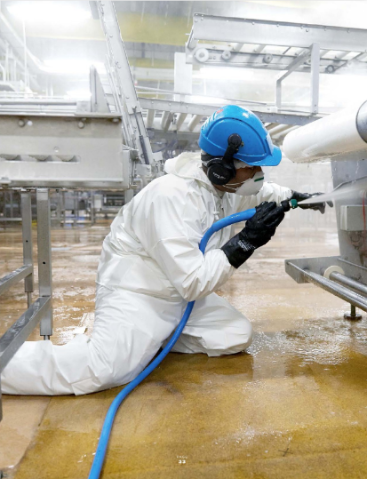
How to identify systemic sanitation problems in 30 days


In most food enterprises, sanitation is perceived as a mandatory operational function: it must be performed in order to meet the requirements, pass an audit and not receive an order. But at the level of business manageability, this is a completely different category.

Sanitation is a strategic risk area that directly affects money, stability and scalability of production.

Any system that can stop production, affect product safety, or lead to complaints from customers and regulators automatically goes beyond the operational level. It is in sanitation that three critical circuits converge: continuity of production, cost, and reputation. If at least one of them fails, the consequences go far beyond the washing area.

Money in this zone is lost systematically and gradually. The main sources of losses look like this:

  • hidden line downtime due to delayed or repeated washes;
  • Overspending of chemicals, water, and energy resources due to lack of parameter control;
  • fines, regulations, and unscheduled corrective actions;
  • returns of products and withdrawal of batches from circulation;
  • reputational losses and the complication of relations with key clients.

Each of these points may seem like a one-time situation. In practice, they rarely occur by accident. Repeated microbiological abnormalities, unstable flushing results, and regular «enhanced» treatments after inspections are signs that sanitation functions as a set of actions rather than as a managed system.

Problems in this area often arise due to systemic deficiencies. The fact is that sanitation is not just about people and instructions. It is important to set up the equipment correctly, control the pressure and supply, dosage of chemicals, regulations and execution. If at least one element is not standardized or controlled, the process becomes dependent on personal decisions. In such a situation, deviations are inevitable, and stability rests on the enthusiasm of individual employees.

Systemic problems manifest themselves through:

  • instability of results under formally identical regulations;
  • the dependence of the washing quality on a specific shift or team;
  • permanent «temporary» solutions that are becoming the norm;
  • the lack of transparent indicators of the effectiveness of the sanitary process.

If we consider sanitation as a system with measurable parameters and an understandable economy, the disadvantages become apparent quite quickly. Already in the first month, it is possible to detect repeated deviations, overspending and the real causes of downtime.

This approach transforms the health service from a zone of constant risk into a tool for cost control and sustainable production.

Why 90% of businesses don't see the real picture


In many food production facilities, sanitation is formal: there are regulations and reports, but this does not guarantee manageability. The phrase «everything is according to the instructions» means only following the procedures, not monitoring the result. Reports are filled out, chemicals are written off, but there is no objective data on the effectiveness of washing. There is no management without metrics – only the appearance of order.

The second problem is the gap between functions:

  • Technologists do not monitor the sanitary execution of processes.
  • The Quality Service records deviations, but does not control the causes.
  • Production accelerates the launch of production lines.
  • Management evaluates only the final indicators (cost, refunds, penalties).

Everyone sees their part, but there is no unified control system. Problems are perceived as separate episodes, creating the illusion of control. Reports and logs are filled out, but there is no manageability due to the lack of cross-cutting indicators linking the sanitary process with the economy. The systemic problem is not always obvious and manifests itself as a constant background: increased downtime, increased consumption of chemicals, deviations in microbiology and unscheduled improvements. These chronic losses go unnoticed for a long time, reducing manageability and profitability.

30-day diagnosis: management algorithm

Systemic sanitation problems are easy to identify without radical reforms. 30 days of continuous diagnosis is enough if you evaluate the process from three sides: manageability, economy and the actual quality of washing and disinfection.

It is important not only to reduce costs, but also to ensure a stable sanitary result – reproducible, measurable and independent of accidents.

Week 1. Audit of the actual picture

The first task is to abandon assumptions and observe the process in real time. The supervision of the car wash should not take place in a demonstration mode, but during a regular work shift.

At this stage, the answers to the questions are recorded:

  • does the actual washing sequence comply with the approved regulations;
  • is the required exposure time of the device being achieved;
  • is the concentration of working solutions maintained;
  • how long does it take to complete the sanitation cycle and start the line?;
  • what is the actual consumption of water and chemicals;
  • are there any repeat treatments or comments on flushing.

The main question of the week is: «Where does the standard differ from reality?» Often the rules are formally correct, but in practice the parameters «float»: the pressure changes, the concentration is determined «by eye», and the exposure is reduced for the sake of acceleration. As a result, the process is underway, but the quality of the sink is unstable.

Week 2. Points of risk and instability

When the actual picture is fixed, the weak points are visible. It is important not only to find individual mistakes, but to understand where they are repeated.

Analyzed:

  • areas with frequent contamination or flushing deviations;
  • «difficult areas» that require intensive or repeated cleaning;
  • differences in results between shifts or teams;
  • cases when microbiological indicators are «on the verge of tolerance»;
  • The proportion of manual work is where the process needs to be automated.

If different results are obtained after the same procedure, the problem is systemic.

High-quality sanitation requires reproducibility: the same level of cleanliness and disinfection must be achieved with each cycle. If the result depends on a particular person, their experience or diligence, it means that the system is not working effectively.

Week 3. The economics of sanitation and the price of unstable quality

In the third week, we move from the technical aspects of sanitation to the financial ones. 

It is important to answer a few key questions:

  • What is the real cost of one washing cycle, taking into account all the resources?
  • How much is one hour of line downtime due to sanitary work?
  • What is the cost structure: chemicals, water, labor, energy?
  • Where are the cost overruns recorded compared to the standards?
  • What is the volume of repeated treatments and related losses?

Special attention should be paid to the cost of unstable quality. Repeated washing, additional flushing, line start–up delays, and post-audit corrective measures are all direct costs.

In addition, unstable disinfection increases the risk of microbiological abnormalities, which leads to product returns and customer complaints. Ultimately, the problem of sanitation always has a financial aspect: poor or unstable quality inevitably affects money.

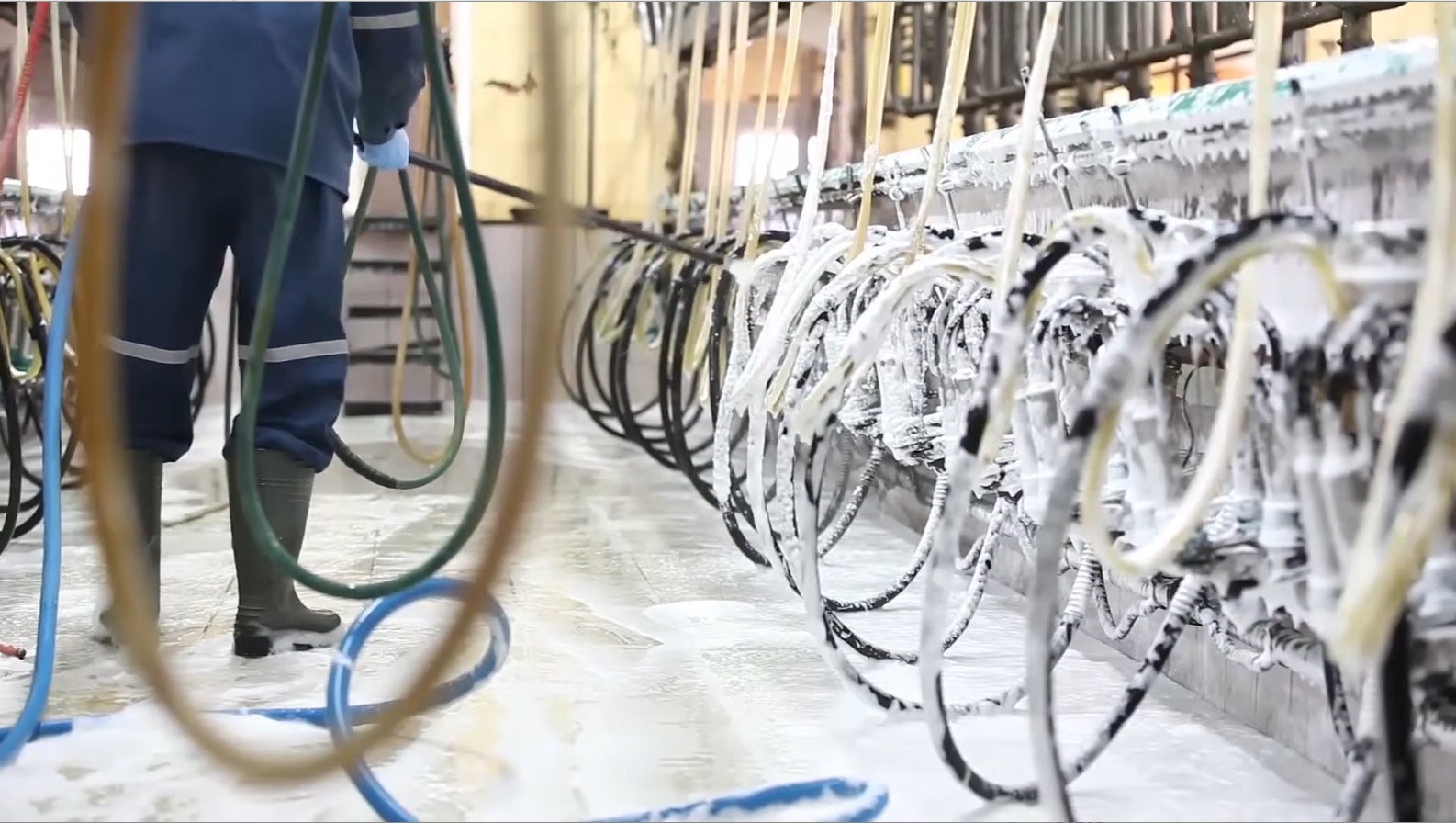
Week 4. Management decisions and strengthening of the sanitary circuit

After 3 weeks of analysis, it becomes clear exactly where controllability is being disrupted and where quality is suffering. At the fourth stage, decisions are made:

  • which regulations require revision based on the actual picture;
  • where it is necessary to eliminate manual operations and ensure stable parameters;
  • which areas of the equipment require modernization or design changes;
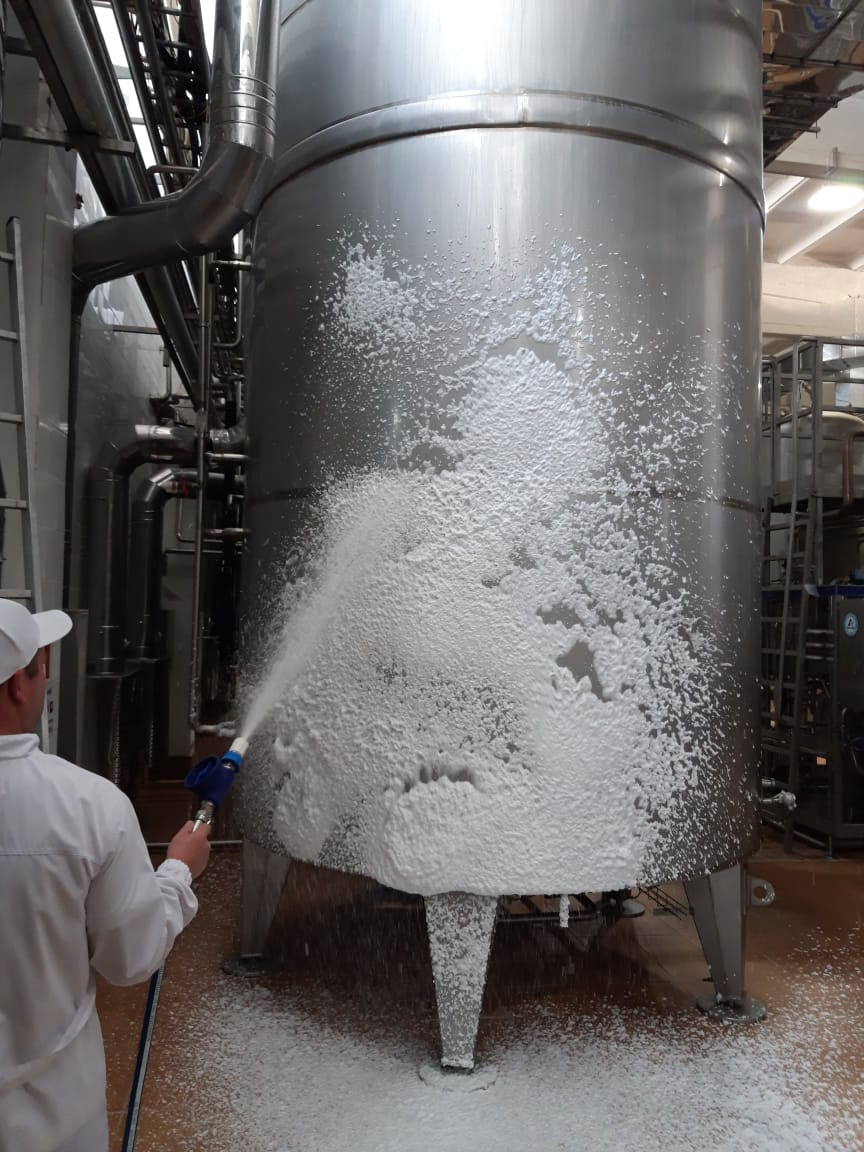
  • where the introduction of foam washing systems allows for uniform application, controlled exposure and predictable results.;
  • which parameters should be recorded and analyzed regularly.

Sanitation equipment is not just a means of applying a solution to a surface. It is a tool for ensuring cleanliness and disinfection. Stable pressure, accurate dosing, uniform foam coating and exposure time control are all important for the microbiological safety of products.

A 30-day diagnosis allows you to see where the process is formally performed, but does not guarantee a stable sanitary result.

5 Signs of a Systemic Sanitation Problem

  1. Chemical consumption exceeds the standard by more than 15%

If the actual consumption of detergents and disinfectants exceeds the estimated consumption, this is not a sign of a safety margin, but a signal of a lack of parameter control. Possible causes: unstable pressure, incorrect dosing, or excessive application to be sure.

It is important to remember that overspending does not always mean better washing quality. Often it only hides the instability of the process.
  1. The quality of the sink depends on the shift

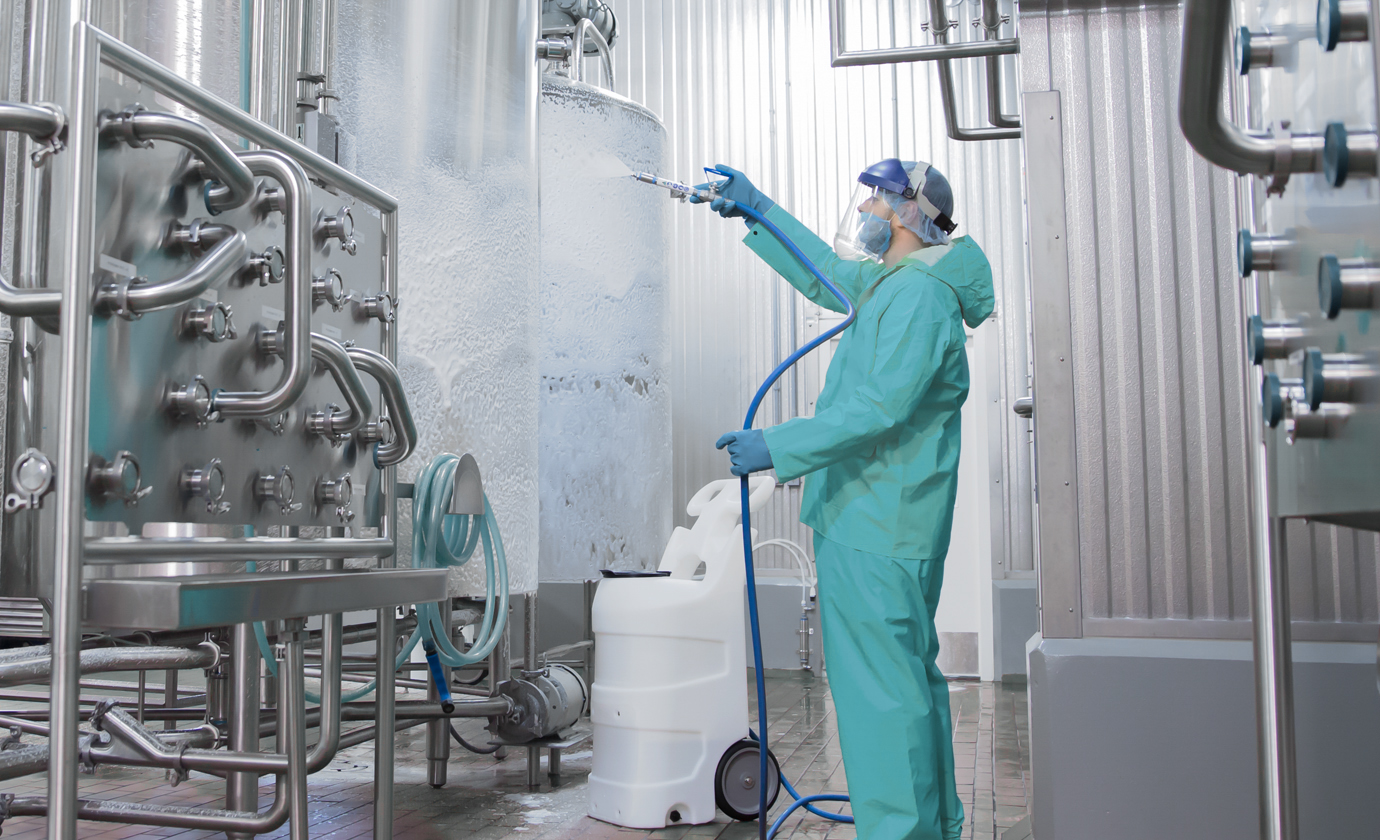
Different results of flushing, differences in the start–up time of the line, and the uneven condition of the equipment after sanitation are a direct signal of dependence on the human factor. The managed system should ensure the same sanitary result regardless of who is working on the shift.

  1. Repeated contamination of the same areas
    If certain areas of the equipment regularly require additional processing or give borderline microbiological indicators, the problem is constructive or technological in nature.

This may be difficult-to-reach geometry, insufficient mortar coverage, unstable exposure, or excessive manual work.

  1. Lack of accurate statistics on washing efficiency

 If it is impossible to answer the questions quickly:

  • how long does the sanitation cycle actually last?;
  • how much does one cycle cost?;
  • how many repeat treatments occur per month;
  • what is the dynamics of microbiological indicators?

This means that the process is not measured systematically. Without objective data, it is impossible to manage either quality or costs. In this case, sanitation exists as a mandatory procedure, but not as a controlled quality and safety circuit.

The presence of at least two of these signs is a reason to consider the problem not as a private failure, but as a systemic risk factor.

What gives a systematic approach to foam systems

Foam washing is not a solution, but a part of the system. A systematic approach combines equipment, regulations and controls, turning sanitation into a quality, cost and risk management tool.

  • Quality stability. With the right system, stable supply pressure, precise chemical concentration, uniform coating, and controlled exposure time are set and maintained. This ensures the same result for each cycle.
  • Projected costs. Fixed parameters allow you to accurately calculate the consumption of chemicals and water, plan the cost of the cycle, and eliminate overspending. Sanitation is becoming a manageable part of the economy.
  • Reducing human influence.Standardization reduces dependence on employee experience through automated dosing, stable regimens, and measurable procedures.
  • Reducing downtime. Stable parameters reduce the time of sanitary pauses, speeding up the start of lines and reducing downtime.
  • Increased security. The controlled system ensures a sustainable sanitary effect, reducing the risks of microbiological contamination and product returns.

A well-designed foam washing system improves quality, cost predictability, and safety, reducing risks and strengthening business.

In food production, sanitation is often perceived as a matter of cleanliness and compliance. But in managerial logic, this is a much more serious category.

It is in the sanitary circuit that they converge:

  • product quality stability;
  • manageability of the production schedule;
  • cost transparency;
  • the level of microbiological safety;
  • the likelihood of fines, refunds, and reputational losses.

When sanitation is structured systematically, it works as a tool to reduce uncertainty. The parameters are set, the result is reproducible, the costs are predictable, the risks are manageable.

When there is no system, the process begins to live its own life. There are «background» cost overruns, unstable quality, and floating downtime. Technically, everything is done, but in fact, it is sanitation that begins to manage costs, schedules, and risk levels.


And here the key question arises.: «Do you manage sanitation or does it manage your costs?»

Our equipment works in factories

SIBAGRO JSC

Baltika Brewing Company LLC

Prodo Tyumen Broiler JSC

Cherkizovo Group of Companies

Komos-Group LLC

JSC Ostankino Meat Processing Plant

JSC Group of Agro-Enterprises "Resource"

JSC Brewery "Moscow-Efes"

LLC "Meat Processing Complex "Atyashevsky"

Yarsk LLC (Dymov Company)

LLC SPK (Siberian Food Complex)

ТОО "Carlsberg"

LLC "Döhler NF and NB"

Russian Cod LLC

LLC "Siberian sausages"

"Tai-Man Food" LLP TM "Small"

JSC "Wimm-Bill-Dann"

JSC Petropavlovsky Dairy Plant

JSC Prodo Tyumen Broiler

Murman-Seafood LLC

Belmare Group LLC

Aktanysh Dairy Plant LLC

Kozhevnikovo Brewery LLC

LLC "A7 Agro - Orenburg Dairy Plant"

OOO Favorit Factory

Healthy Food Factory LLC

Vikbir Brewery LLC

Fish Hit LLC

LLC "Cold"

Timashevskaya Poultry Farm LLC

OJSC "Sarapul-Moloko"

JSC Milkom

Ruskom LLC, Golyshmanovskaya PTF

Petkorm LLC

OOO "Vostochny"

Sakhalin Agroholding LLC

IP Kindrachuk T.N. TM "Izobilny Olympus"

LLC "Rikon"

Cherkashin and Partners LLC

Sarapul Meat Processing Plant LLC

LLC "SPK", Branch "Cherepanovsky"

JSC Perm Cold Storage Plant "Sozvezdie"

JSC "Borovskaya Poultry Farm"

LLC "Ruza Blending Plant"

LLC "PF Ulybino"

LLC "Production Company "Samobranka"

JSC "Rust Russia"

LLC "Lyubava"

Altai Duck LLC

Kamskie Syrodelni LLC

Agricultural production cooperative "Usolsky Pig Complex"

OOO "Tasty Life"

LLC "Kintizma"

Kazan Dairy Plant LLC

SPPK "Shangal"

Zhukovskoye Milk LLC

JSC Poultry Farm "Verkhnevolzhskaya"

LLC "Kiprinsky Dairy Plant"

LLC "Barnaulsky pischevik"

JSC "Chicken Kingdom "Bryansk branch"

OOO "Diaf"

OJSC "Kolkhoz Oktyabr"

JSC "Oktyabrskaya Poultry Farm"

IP Dushchenko V.A.

Kuzbass Food Processing Plant CJSC

JSC Pig-breeding complex "Uralsky"

SPO SSPK "Druzhba"

MP "Yamal Deer"

JSC Company "Proxima"

Food Plus LLC

Miramit LLC

Afanasy Private Brewery LLC

JSC "Chikskaya Poultry Farm"

JSC APK Orlovskaya Niva

JSC "Northern Star"

Dalpico Fish LLC

Sibbars LLC

LLC "Triton"

Fugu Moscow LLC

Planet Mirital LLC

LLC "Factory Bakhetle"

LLC "Tavria Meat Processing Plant"

LLC "Meat Processing Plant Remit"

JSC "Klinsky Meat Processing Plant"

JSC "Reftinskaya Poultry Farm"

LLC "Pivzavod"

Volkov LLC

LLC "TD Dubrovka Milk"

Advantages

Work with us
Own production
Own production

We ourselves produce most of the items for the system: Pumping stations, foam stations, mobile carts, holders, mounting stands, etc.

Own Trademark
Own Trademark

We have registered our own trademark and always make sure that the client is satisfied and recommends us to specialists from other enterprises

Our work experience
Our work experience

The OdysseySystems company provides a full range of services in matters of cleanliness in food enterprises: from application processing to facility commissioning and personnel training. Our specialists will install the system in any region of the Russian Federation.

Providing a test sample

For enterprises that have water treatment systems installed that provide a working pressure of 20 bar, we can provide a test sample of a foam satellite for 30 days for operation at the enterprise.

Staged financing
Staged financing

The advance payment is 50% of the total contract amount. 30% is paid before shipping the goods to the customer. 20% is paid within 10 days after signing the equipment acceptance certificate

Turnkey works
Turnkey works

The OdysseySystems company provides a full range of services in matters of cleanliness in food enterprises: from application processing to facility commissioning and personnel training. Our specialists will install the system in any region of the Russian Federation.

Отправляя форму, соглашаюсь на обработку персональных данных и принимаю политику конфиденциальности