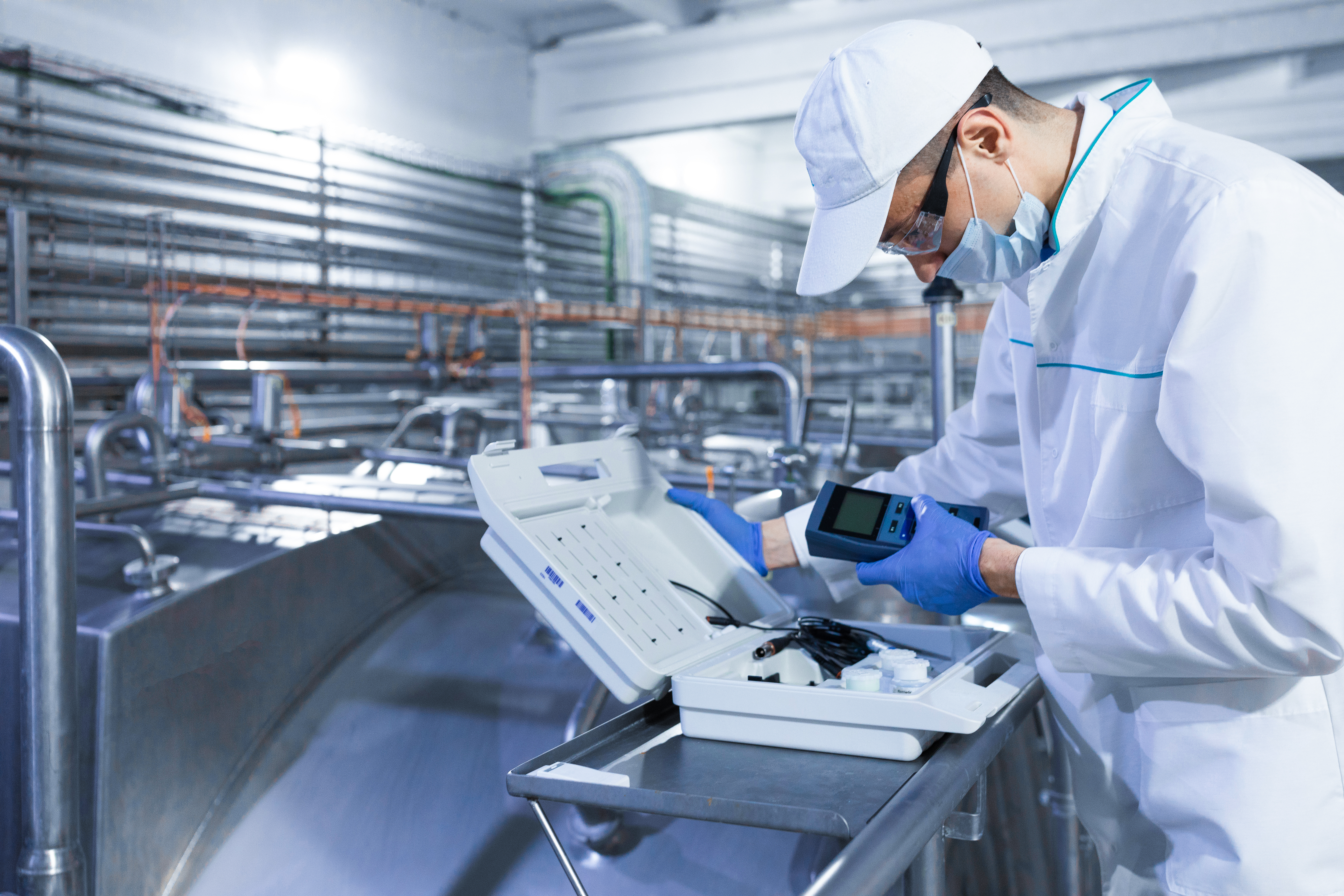
Hygienic plan for cleaning and disinfection of food enterprises

Hygiene in food production is the foundation of trust between producer and consumer. Any deviation from purity standards can lead to serious consequences, from an increase in microbiological hazards to production shutdowns and reputational losses.

In the conditions of modern competition and the tightening requirements of regulatory authorities, it is not enough for enterprises to carry out cleaning «as needed». A systematic approach based on a clearly defined hygiene plan is required.

What is a hygiene plan?

The hygiene plan for washing and disinfection is a basic organizational document that describes all the processes related to sanitary treatment at the enterprise. It records:

  • Which areas, surfaces, and equipment should be cleaned?;
  • what methods are used for washing (manual, foam, CIP, etc.);
  • what detergents and disinfectants are used?;
  • what is the frequency of processing;
  • who is responsible for the implementation and control of procedures.

In fact, the hygiene plan is an enterprise’s «cleanliness roadmap» and serves as a tool for product safety management systems.

The key objective of the plan – preventing any contamination (biological, chemical, physical) and ensuring that the finished product remains safe for the consumer.

Legal and industry requirements
The hygiene plan is not an internal initiative, but is fixed in a number of regulations:

  • System HACCP – It provides for risk analysis and control of critical points, including those related to the cleanliness of equipment and premises.
  • ISO 22000 and related food safety standards require a documented approach to hygiene processes.
  • National standards and sanitary regulations (GOST standards, SanPiN) – They establish mandatory standards for cleaning and disinfection for different types of food industry enterprises.

The main elements of the hygiene plan

In order for a hygiene plan to be a working tool rather than a formal document, it must include all the key components of the washing and disinfection process.

01 1. Cleaning zones and facilities The first step is to determine which rooms and surfaces require regular treatment. Usually the plan includes: production areas (workshops, lines, equipment); auxiliary rooms (warehouses, packing areas, refrigerators); sanitary facilities, household facilities, and drainage systems.
02 2. Frequency and sequence of washing/disinfection Different objects require different processing intervals. For example, work surfaces and equipment are cleaned after each shift, floors and walls are cleaned daily, and drains are cleaned several times a week. It is also important to prescribe the procedure: from less polluted areas to more polluted ones, from upper surfaces to lower ones.
03 3. Detergents and disinfectants used Optimal compositions are selected for each task.: alkaline means for removing fats, acids for scale and mineral deposits, specialized disinfectants for the destruction of microflora. The plan sets out the name, concentration, and rules for the use of funds.
04 4. Washing methods The processing method depends on the type of equipment and the specifics of the production: manual washing – for small tools and hard-to-reach parts; foam sink – for walls, floors, and open surfaces of equipment; CIP-sink (clean-in-place) – for closed systems (tanks, pipelines) where disassembly of equipment is impossible.
05 5. Staff and their responsibilities The plan should clearly indicate who performs the specific procedures. Individual employees or teams may be responsible for cleaning different areas and facilities, and control is assigned to the foreman or a quality specialist. This eliminates the "blurring of responsibility" and guarantees compliance with the sanitary regime.
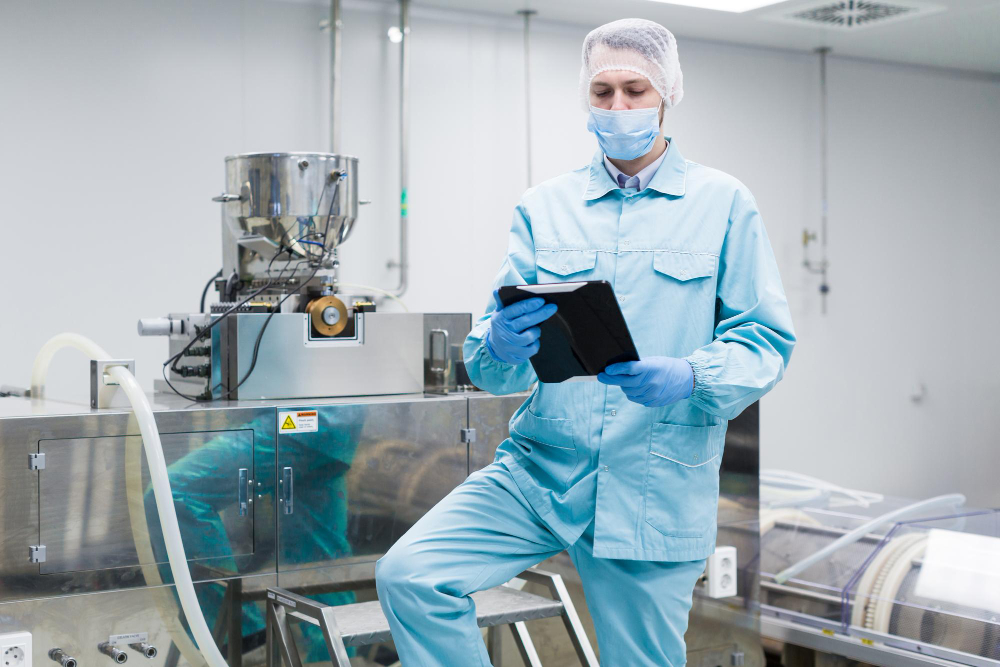
A well–written hygiene plan covers all levels of the process organization, from the list of zones to the distribution of responsibilities, which makes it a working tool for managing production safety.

An example of a general hygiene plan for a food company

Below is a universal version of the hygiene plan. It demonstrates the main parameters for different production areas. Such a plan can be adapted to the specifics of the enterprise by changing the frequency of processing, the set of tools and washing methods.

  • Production surfaces (tables, trays, inventory)
    • Treatment method: foam washing + disinfection
    • Tools: alkaline detergent + dez ingredients
    • Frequency: after each shift
    • Responsible: shift worker
    • Control: visual inspection, flushing

  • Equipment (conveyors, cutting machines, filling lines)
    • Treatment method: disassembly (if possible), washing and disinfection
    • Products: specialized formulations for removing fats and proteins
    • Frequency: after each shift
    • Responsible person: foreman or line operator

Control: ATP tests, laboratory flushes

  • Floors and walls
    • Treatment method: foam washing
    • Tools: universal alkaline remedy
    • Frequency: daily
    • Responsible person: cleaner
    • Control: visual inspection

  • Drainage systems
    • Treatment method: mechanical cleaning + disinfection
    • Products: specialized preparations for drains
    • Frequency: at least twice a week
    • Responsible person: cleaner or technical staff
    • Control: entries in the accounting log
  • Raw materials warehouse
    • Treatment method: wet cleaning + disinfection
    • Tools: an alkaline remedy
    • Frequency: once a week
    • Responsible person: warehouse manager
    • Control: internal audit

  • Warehouse of finished products
    • Treatment method: wet cleaning
    • Products: neutral detergent
    • Frequency: once a week
    • Responsible person: warehouse manager
    • Control: internal audit
  • Sanitary facilities and household facilities
    • Treatment method: washing + disinfection
    • Tools: universal disinfectant
    • Frequency: daily
    • Responsible person: cleaner
    • Control: visual inspection, checklists

Step-by-step algorithm for developing a hygiene plan

Creating an effective hygiene plan is a consistent process that requires a systematic approach. Below are the key steps that will help you form a working document:

1 Enterprise analysis and classification of zones by risk level
Production areas are divided into zones: high-risk (processing of raw materials, open lines), medium (packaging), low (warehouses, household premises). Special cleaning and disinfection requirements are defined for each zone.

2 Identification of critical points
It is necessary to identify the equipment and surfaces where contamination is most likely (for example, cutting surfaces, conveyor belts, drains). These points require more frequent monitoring and careful processing.

3 Drawing up regulations and instructions
For each zone and object, the following are prescribed: processing methods, means used, concentrations, exposure time, and procedure. The instructions should be clear and understandable to the staff.

4 Assignment of responsibilities and staff training
A person responsible for the implementation of procedures and for quality control is appointed. All employees involved in cleaning are instructed and regularly trained to eliminate mistakes and increase efficiency.

5 Implementation of the monitoring and documentation system
All procedures are recorded in journals or electronic systems. Washing quality control is carried out visually, as well as through flushing and rapid rapid tests (for example, ATP). Documentation helps to prove compliance with the standards during inspections.

6 Regular review and updating of the plan
The plan should be a «living» document. When changing the product range, upgrading equipment, or introducing new technologies, it must be adjusted.

Following this algorithm, the company receives not a formal document, but an effective product safety and quality management tool.

Monitoring and verification of the hygiene plan

Even the most carefully developed hygiene plan will not be useful if you do not organize a system for monitoring its implementation. Quality control of washing and disinfection makes it possible to ensure that sanitary procedures actually ensure product safety, rather than being carried out formally.

The control is carried out in several ways. First of all, a visual assessment is used – this is the simplest and fastest method to identify the remnants of dirt, plaque, or traces of improper application of detergents. However, visual inspection alone is not enough, so it is supplemented with laboratory flushes and express methods. ATP testing is considered to be one of the most effective tools, which makes it possible to assess the presence of organic pollutants on equipment surfaces and in rooms in a matter of minutes.

Documentation maintenance is an integral part of verification. Each washing and disinfection procedure should be recorded in logs or in digital systems indicating the date, time, performer and control results. Such documentation serves not only as an internal management tool, but also as evidence for regulatory authorities.

Regular internal audits help to assess how well the actual execution corresponds to the approved plan, identify weaknesses and make timely adjustments. Thus, control and verification transform the hygiene plan from a set of rules into a really working mechanism to ensure the safety of food production.

Typical mistakes in the implementation of a hygiene plan

In practice, many enterprises are faced with the fact that the hygiene plan exists only «on paper» and does not bring the expected result. This is due to a number of common mistakes that are important to avoid.

One of the most common problems is the rare updating of the plan. Production is developing, new lines are being launched, the assortment is changing, but the document itself remains unchanged. As a result, the regulations lose their relevance and cease to correspond to real processes.

An equally dangerous mistake is the lack of staff training. Even the most competent plan will be ineffective if employees do not understand what actions need to be performed, why detergent concentrations are important, and how to use the equipment correctly.

Incorrect choice of chemicals or washing methods is also common. The use of unsuitable formulations leads either to insufficient cleaning or to damage to surfaces and equipment. In addition, manual processing methods without the use of specialized technologies may be too time-consuming and may not provide stable quality.

Finally, the formal approach to control is a serious mistake. If inspections are carried out only «for report,» then the real risks of contamination go unnoticed, and the company turns out to be vulnerable both from the point of view of product safety and in the eyes of regulatory authorities.

A systematic approach helps to avoid these mistakes: regular updating of the document, staff training, use of professional equipment and real control of execution. Only in this case, the hygiene plan fulfills its main task – it protects the products and the reputation of the enterprise.

Партнеры

ОдиссейСистемс

ОдиссейСистемс

ОдиссейСистемс

ОдиссейСистемс

ОдиссейСистемс

ОдиссейСистемс

Advantages

Work with us
Own production
Own production

We ourselves produce most of the items for the system: Pumping stations, foam stations, mobile carts, holders, mounting stands, etc.

Own Trademark
Own Trademark

We have registered our own trademark and always make sure that the client is satisfied and recommends us to specialists from other enterprises

Our work experience
Our work experience

The OdysseySystems company provides a full range of services in matters of cleanliness in food enterprises: from application processing to facility commissioning and personnel training. Our specialists will install the system in any region of the Russian Federation.

Providing a test sample

For enterprises that have water treatment systems installed that provide a working pressure of 20 bar, we can provide a test sample of a foam satellite for 30 days for operation at the enterprise.

Staged financing
Staged financing

The advance payment is 50% of the total contract amount. 30% is paid before shipping the goods to the customer. 20% is paid within 10 days after signing the equipment acceptance certificate

Turnkey works
Turnkey works

The OdysseySystems company provides a full range of services in matters of cleanliness in food enterprises: from application processing to facility commissioning and personnel training. Our specialists will install the system in any region of the Russian Federation.

Отправляя форму, соглашаюсь на обработку персональных данных и принимаю политику конфиденциальности